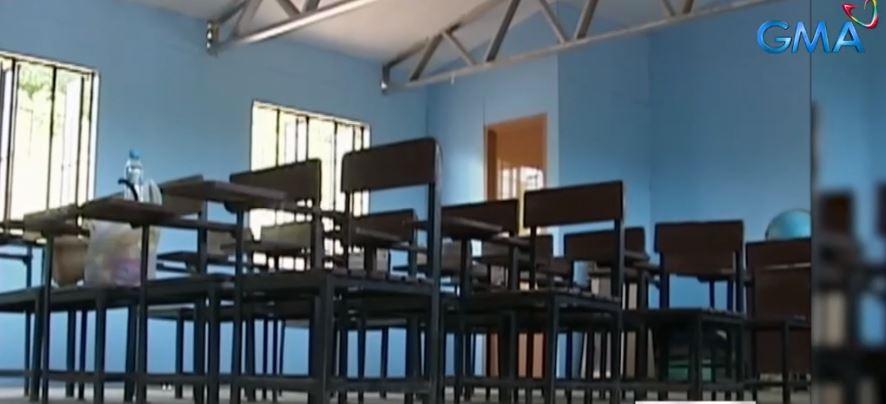
Philippines PPP: P10.5 Billion School Infrastructure Project – A Blueprint for Educational Progress
The Philippines, a nation with a rapidly growing population and a deep-seated commitment to education, has long grappled with the challenge of providing adequate learning environments for its youth. The sheer demand for classrooms often outstrips the government's traditional capacity to build them, leading to overcrowding and suboptimal learning conditions. To address this critical need, the Philippine government embarked on a groundbreaking initiative: the Public-Private Partnership (PPP) for School Infrastructure Project (PSIP). This ambitious program, initially injecting P10.5 billion into its first phase, stands as a testament to the power of collaboration in national development, particularly within the vital sector of ppp school infrastructure.
The PSIP represented a significant departure from conventional procurement methods, leveraging private sector efficiency and capital to accelerate the delivery of much-needed educational facilities. Its goal was not merely to build structures but to create conducive learning spaces that would empower millions of Filipino students for generations to come. The first phase, focused on the densely populated island of Luzon, aimed for an impressive target: 9,332 new classrooms, ready for the start of the 2013-2014 school year. This article delves into the intricacies of this landmark project, exploring its design, execution, and lasting impact on the landscape of Philippine education.
The Philippines' Ambitious PPP School Infrastructure Vision
The decision to adopt a Public-Private Partnership model for school infrastructure was a strategic response to an urgent national issue. With a chronic shortage of classrooms across the archipelago, traditional government budgeting and construction processes often struggled to keep pace with demand. The PPP framework offered a viable alternative, allowing the government to tap into private sector expertise, innovation, and financial resources, thereby accelerating project delivery and potentially enhancing quality and efficiency.
The PSIP was designed as a multi-phase undertaking, recognizing the nationwide scope of the classroom deficit. Phase 1 specifically targeted Luzon, with subsequent phases planned for Visayas and Mindanao. This phased approach allowed for a focused and manageable initial rollout, providing valuable lessons that could be applied to future expansions. The initial P10.5 billion investment for Phase 1 was a substantial commitment, with the government demonstrating its long-term resolve by planning to pay for the infrastructure construction over a 10-year period, utilizing staggered appropriations from the national budget. This financial model provided a predictable revenue stream for private partners while distributing the financial burden on the government over an extended period.
By leveraging the ppp school infrastructure model, the Department of Education (DepEd) aimed to overcome bottlenecks, infuse modern construction techniques, and ensure timely completion of projects. The urgency was palpable: classrooms needed to be delivered by July 2013 to accommodate the incoming students for the new school year. This aggressive timeline underscored the government's determination to address the educational infrastructure gap promptly and effectively.
Breaking Down Phase 1: Geographic Reach and Classroom Targets
The first phase of the PPP for School Infrastructure Project was meticulously divided into three distinct packages, each targeting specific regions within Luzon. This compartmentalized approach allowed for specialized focus and potentially multiple contractors, fostering competition and efficiency. The packages were:
- Northern Luzon: This package aimed to construct 2,050 classrooms across 660 schools.
- Central Luzon: The largest single package, targeting 2,999 classrooms across 745 schools.
- Calabarzon: A vital economic region, requiring 4,283 classrooms in 1,097 schools.
In total, Phase 1 was set to deliver 9,332 new classrooms, a massive undertaking designed to alleviate congestion and improve learning conditions for hundreds of thousands of students. DepEd's strategy was to accept bids for each package independently, meaning there was a possibility of having three different winning companies for the first phase. Alternatively, a single company could emerge victorious if its bids proved to be the lowest and most competitive across all three packages. This flexible bidding structure was intended to maximize competition and secure the best value for money for the government.
The ambitious goal of having all these classrooms delivered by July 2013 highlighted the DepEd's commitment to ensuring that no child would be left without a proper learning space at the start of the school year. Such an accelerated timeline required exceptional project management, seamless coordination between public and private entities, and a robust monitoring system to ensure quality and adherence to schedules. This focus on rapid, high-quality delivery is a cornerstone of effective ppp school infrastructure initiatives.
Attracting Private Sector Interest: The Driving Force of PPP School Infrastructure
The success of any PPP project hinges significantly on its ability to attract credible and capable private sector partners. For the PSIP, the initial response from the private sector was highly encouraging. According to Education Undersecretary Francisco M. Varela, as many as 15 companies expressed keen interest, purchasing bid documents early in the process. This strong showing underscored the viability and attractiveness of the ppp school infrastructure model in the Philippines.
The pool of interested firms was diverse, comprising a mix of local and foreign companies, some of which were listed on stock exchanges or affiliated with major corporations. This diversity was a positive indicator, suggesting a competitive bidding environment that could drive down costs and foster innovation. Undersecretary Varela also hinted at the possibility of these companies forming partnerships, a common practice in large-scale infrastructure projects to pool resources, expertise, and mitigate risks. This robust interest, as detailed in related reports like Firms Vie for Philippines P10.5B School Infrastructure PPP, was crucial for the project's momentum.
What draws private entities to such projects? Beyond the direct financial returns from a stable, long-term government contract, many companies recognize the significant social impact of investing in education. Building schools contributes directly to community development, corporate social responsibility goals, and long-term economic growth. For foreign firms, it also represents an opportunity to enter a growing market and establish a strong presence. The government's commitment to a transparent bidding process, with invitations to pre-qualify published in January and bids for Phase 1 aimed for June, further boosted private sector confidence. This blend of public need and private capability is precisely what makes ppp school infrastructure projects so powerful.
The Long-Term Impact and Future of PPP School Infrastructure
The P10.5 billion PPP for School Infrastructure Project, particularly its ambitious first phase, extends far beyond the physical construction of classrooms. Its true impact lies in its potential to transform the educational landscape of the Philippines and serve as a blueprint for future public service delivery. By adding 9,332 classrooms, the project significantly eased overcrowding, reduced class sizes, and provided students with more conducive learning environments. Improved facilities directly correlate with better attendance rates, higher student engagement, and ultimately, enhanced academic performance. This critical target was underscored by the Department of Education, as explored further in DepEd Aims for 9,332 New Classrooms by July 2013 via PPP.
Moreover, the PSIP demonstrated the effectiveness of the PPP model in addressing large-scale infrastructure deficits efficiently. It showcased how strategic collaboration between the public and private sectors can overcome financial constraints and bureaucratic hurdles to deliver essential services. The lessons learned from this project, from contractual frameworks to monitoring mechanisms and community engagement, are invaluable for replicating the model in other sectors such as healthcare, transportation, and water utilities.
Practical Tips for Successful PPPs in Education:
- Clear Legal and Regulatory Frameworks: Establishing robust guidelines ensures transparency, fairness, and predictability for all stakeholders.
- Rigorous Due Diligence: Thorough assessment of private partners' technical and financial capabilities is paramount.
- Performance-Based Contracts: Linking payments to specific performance metrics (e.g., timely completion, quality standards, maintenance) incentivizes efficiency.
- Community Engagement: Involving local communities in the planning and monitoring phases fosters ownership and ensures the projects meet local needs.
- Robust Monitoring and Evaluation: Continuous oversight ensures project quality, adherence to timelines, and addresses any issues proactively.
- Risk Allocation: Clearly defining and allocating risks between public and private partners minimizes disputes and improves project stability.
The success of the initial phases of ppp school infrastructure projects in the Philippines has laid a strong foundation for future collaborations, potentially inspiring more private investment in social infrastructure. It fosters an ecosystem where innovation thrives, resources are optimized, and the ultimate beneficiaries—the students—receive the quality education they deserve.
Conclusion
The Philippines' P10.5 billion PPP for School Infrastructure Project stands as a pivotal moment in the nation's journey towards educational advancement. By strategically embracing public-private partnerships, the government unlocked a rapid and efficient pathway to address a critical classroom shortage, delivering thousands of modern learning spaces where they were needed most. This initiative not only provided tangible infrastructure but also championed a collaborative model for national development, demonstrating how shared vision and resources can overcome significant challenges. The successful execution of Phase 1, marked by strong private sector interest and an ambitious timeline, has set a powerful precedent for the future of ppp school infrastructure and beyond, promising a brighter, more educated future for the Filipino youth.